January 29, 2026
Why you also “need” medium format film photography for your wedding.
Why you also need medium format film photography for your wedding.
The Art of Medium Format Film Photography.
What is Medium Format Photography, and why “you” NEED it.
Medium format is film photography on a bigger negative, and that one detail changes everything. You get smoother backgrounds, richer depth, and a quiet “luxury” look that isn’t a filter and can’t be faked. It’s not vintage for the sake of it; it’s timeless because it feels like a real memory. If digital is clean and razor-sharp, medium format is sharp with soul. Skin tones stay gorgeous, bright highlights (like a sunlit dress) roll off softly, and the image carries this subtle texture that just hits different. You might not know why… you’ll just know. Boiling it down, here are seven important points to know.
1) It’s the look you can’t fake.
Editing Presets can imitate color. They can’t replicate what film does with light. Film has a softness, depth, and texture that feels natural, not edited. Medium format takes it to the next level. When you see it, it’s instantly “wow”… and it stays “wow” forever. Why? Well, silver halide crystals, the light-sensitive grains in photographic film, react when light hits them, forming a “latent” (invisible) image. During development, the exposed crystals are converted to metallic silver (or dye clouds in color film), producing the final photo. The photo you see is physically touchable.
2) Medium format is the “luxury print” camera.
Because the film is larger, the image appears larger. Backgrounds melt, faces pop, and everything feels 3D in a really gentle, romantic way. It’s not about being vintage. It’s about the image feeling expensive and timeless without trying.
3) It shines exactly where you want it to.
Film is PERFECT for the frames you’ll actually print: bride + groom portraits, golden hour, details, quiet emotional moments, the kind of images you frame on your wall and keep forever. Digital tells the full story. The film provides the book cover.
4) It’s rare. Like… actually rare.
Most photographers don’t shoot film anymore, and even fewer shoot medium format well (consistently, in real wedding-day lighting, under real pressure). If you want something that doesn’t look like everybody else’s wedding photos on Instagram, film is how you get there.
5) It’s intentional by design.
Film slows me down in the best way. Every frame is deliberate. No spray-and-pray. No “we’ll fix it later.” It’s a craft. That’s why film images tend to feel more meaningful and more “you” when you look back.
6) The cost is real because the process is real.
Film isn’t a button I press. It’s film stock, loading, metering, shooting carefully, professional processing, high-end scanning, and time. Medium format, especially, is heavier, slower, and more demanding, but the payoff is exactly why people still pay for it.
7) It’s the only add-on people message me about years later.
Couples rarely regret adding film. They do regret skipping it when they see the final gallery and realize, “Wait… those film frames are the ones I can’t stop staring at.”
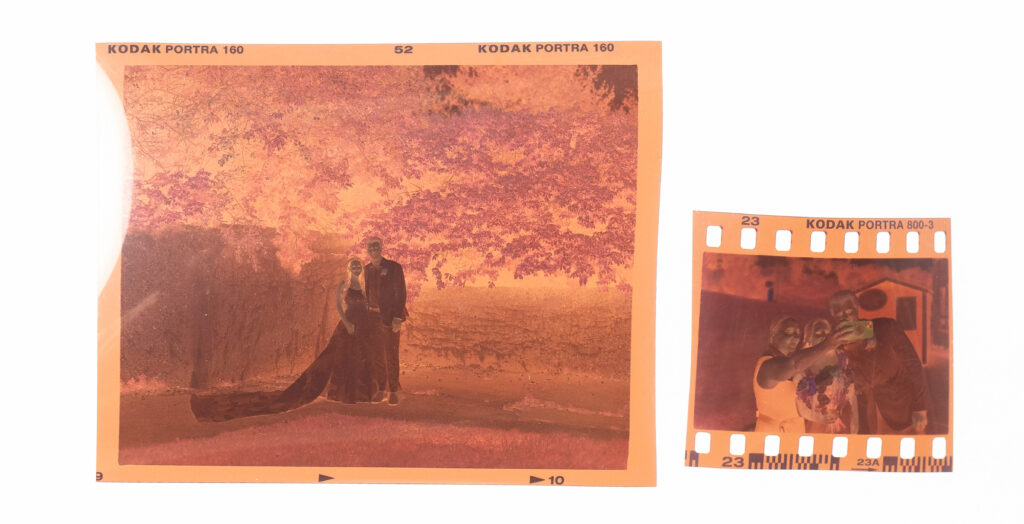
Medium Format (120) Negative (left) & 35mm Negative (right)
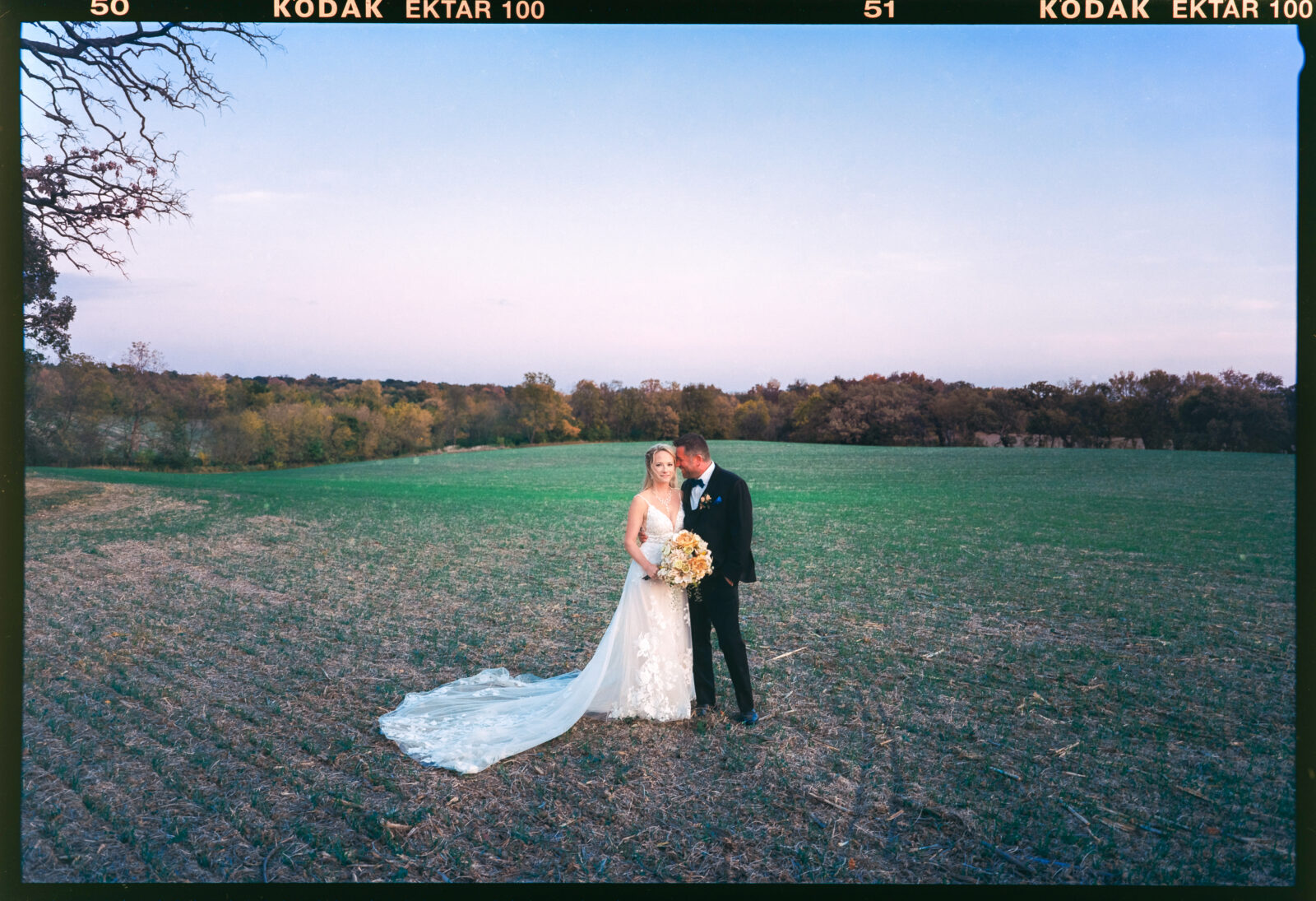
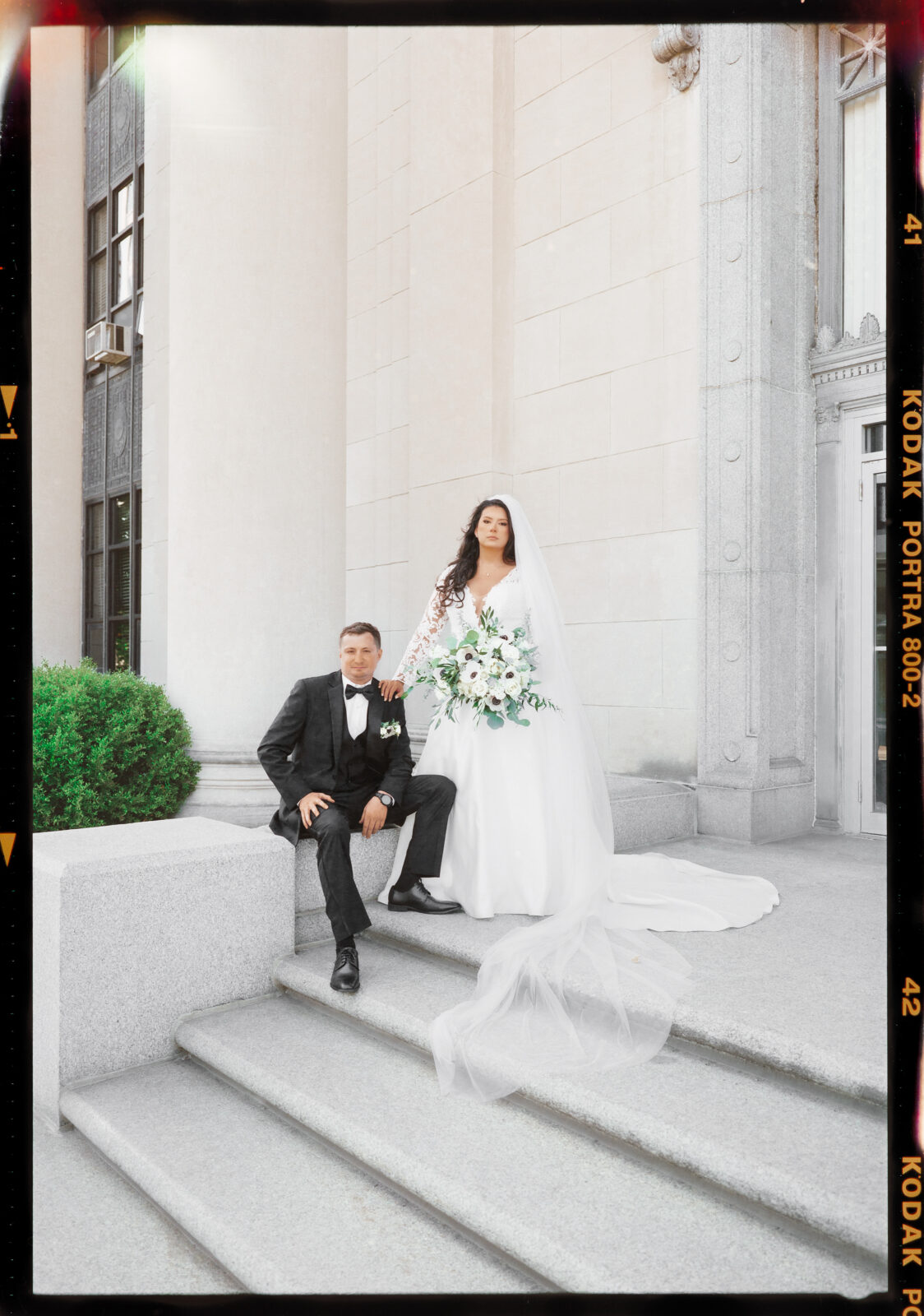
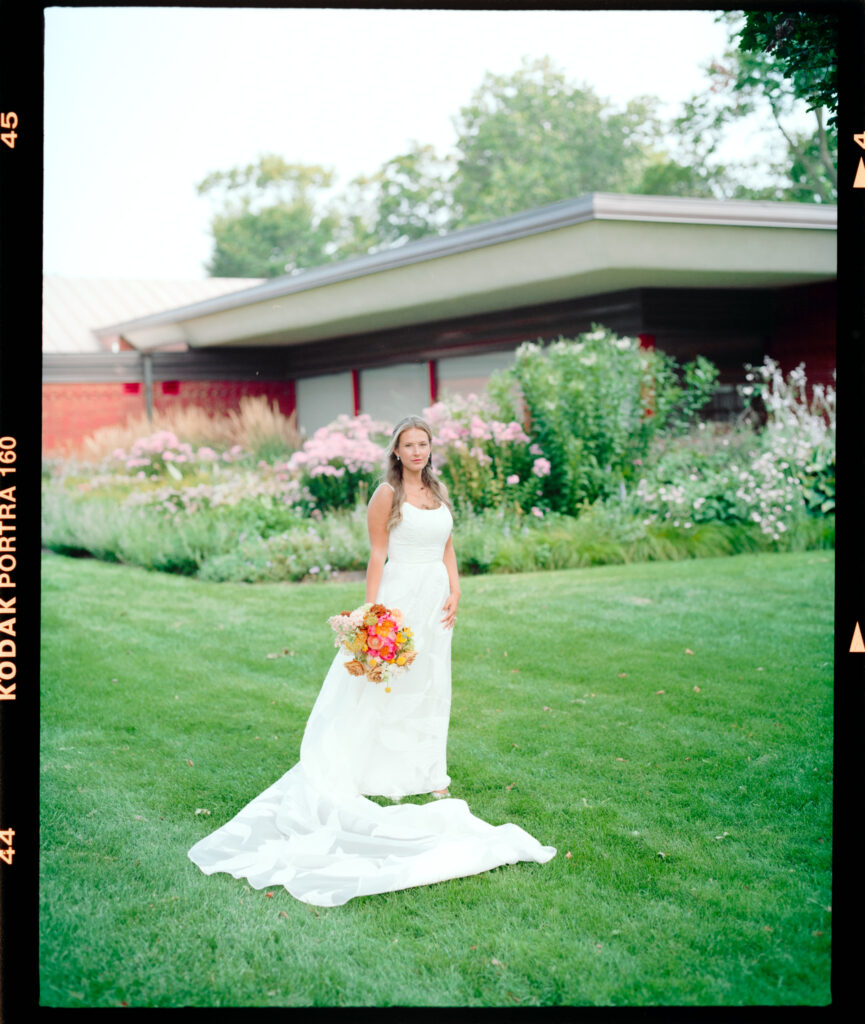
Amanda & James (above)
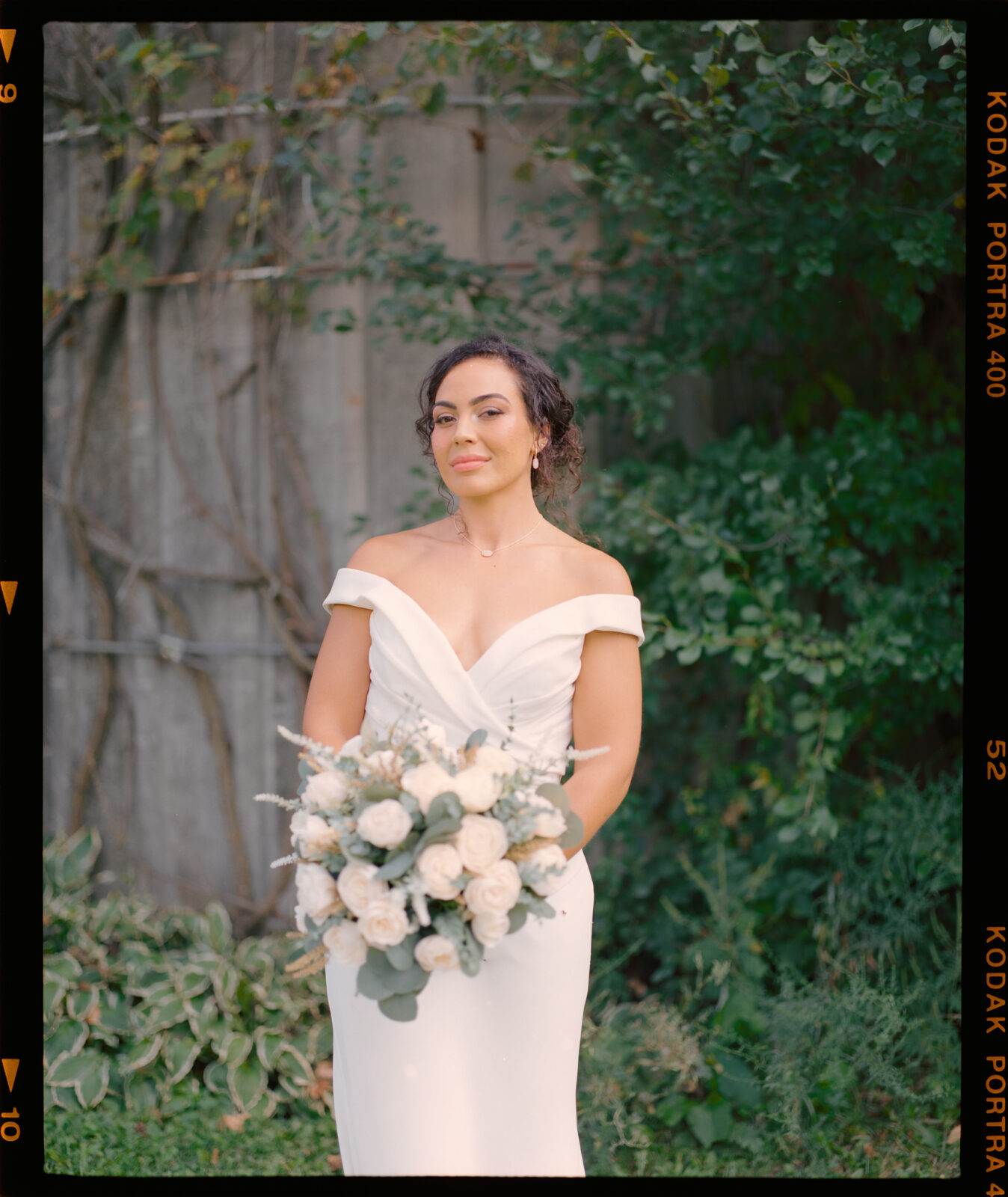
Pentax 6×7 MLU w/ Takumar 105mm f/2.4
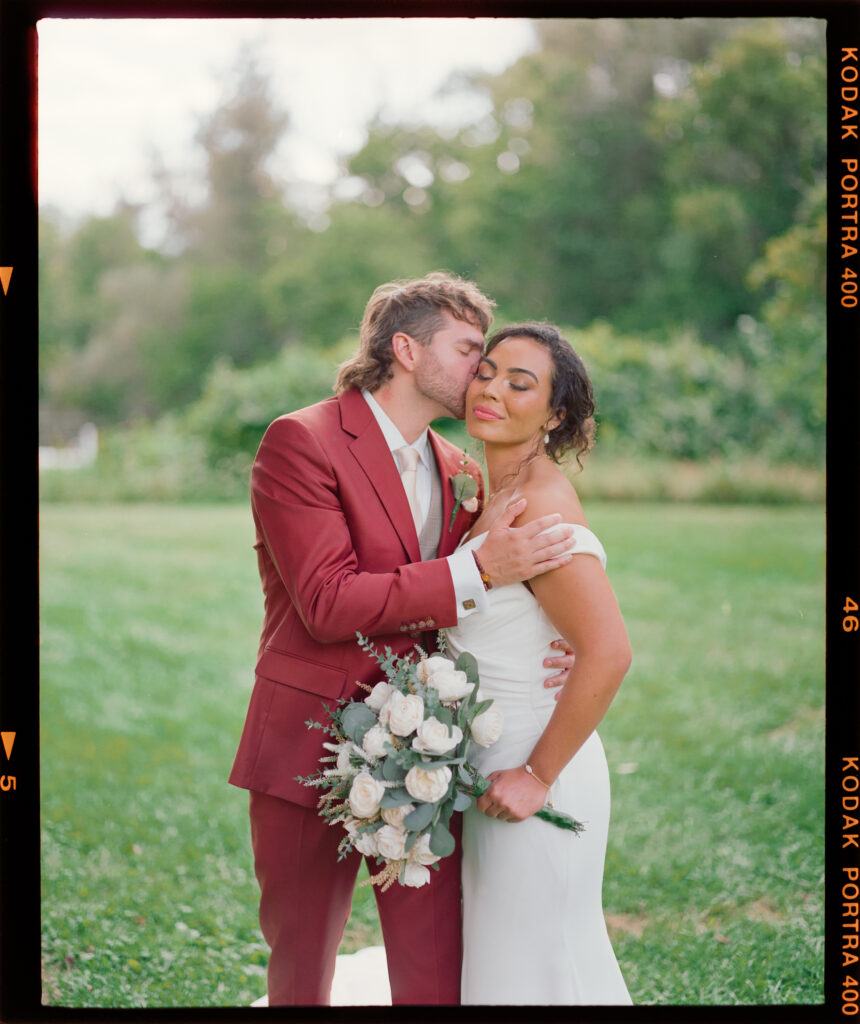
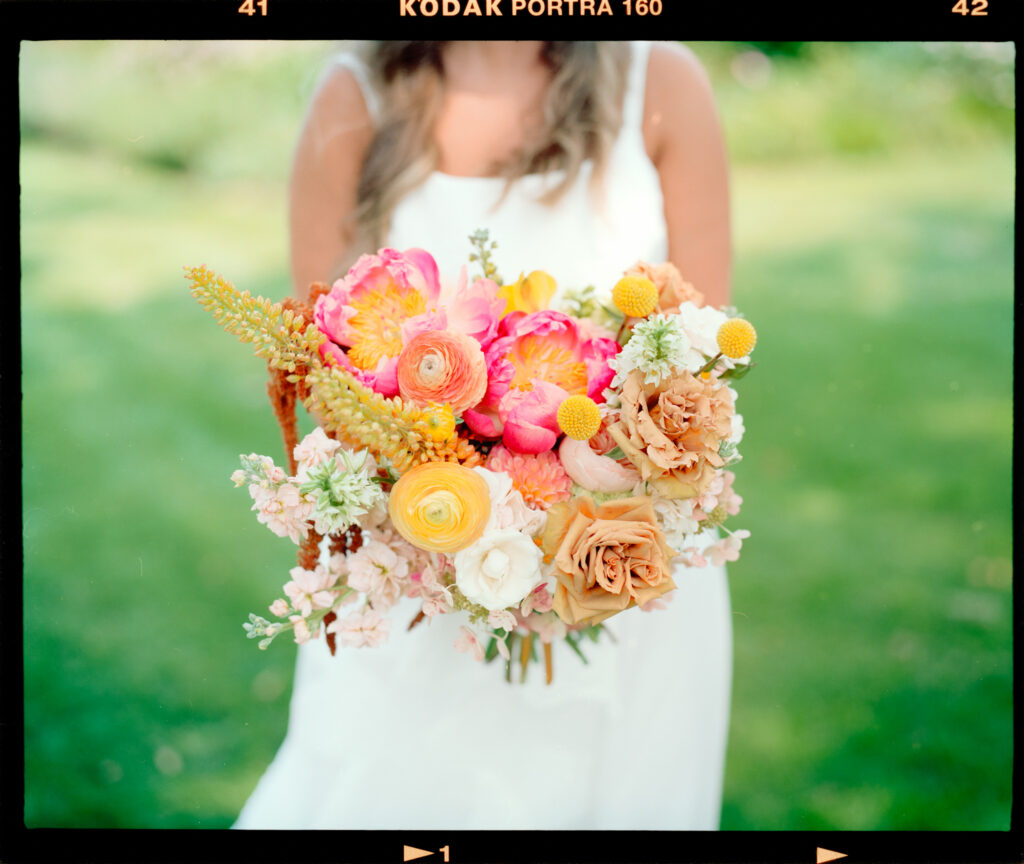
Izzy (below)
Pentax 6×7 MLU w/Takumar 105mm f/2.4
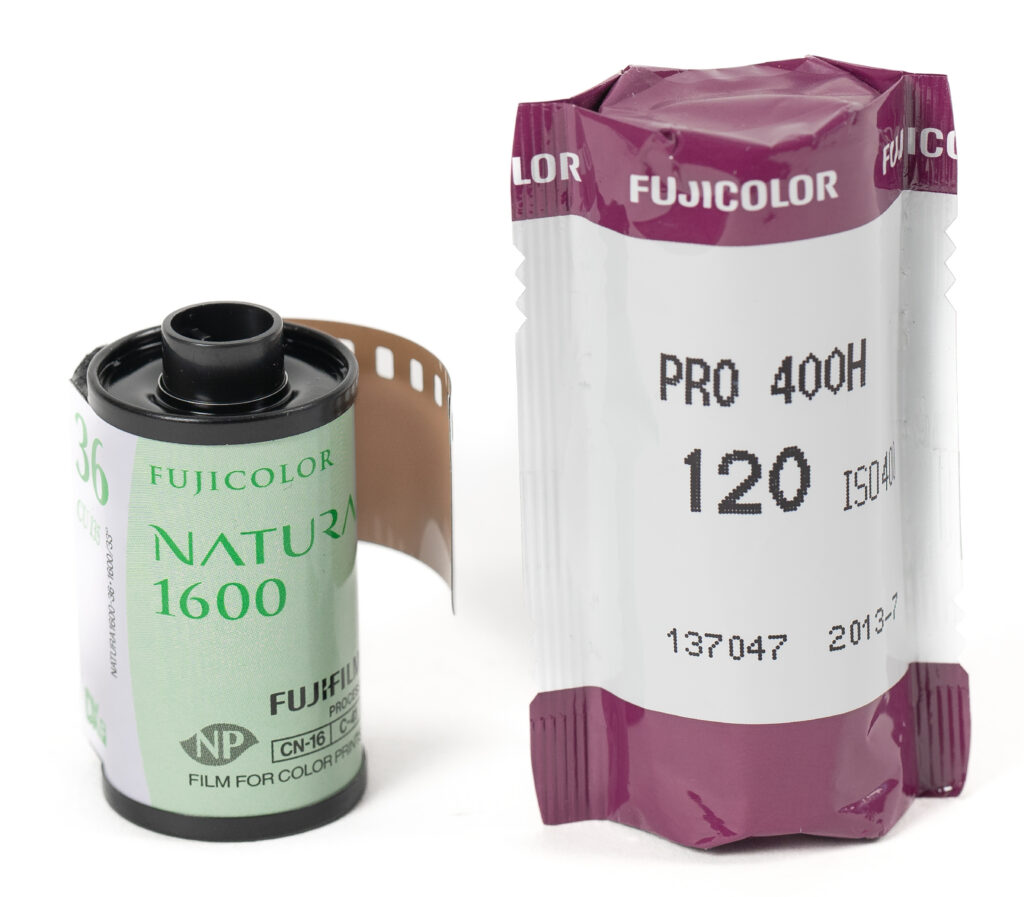
A roll of 35mm film next to a roll of medium format film. The size is a bit different!
Izzy (below)
Pentax 6×7 MLU w. Takumar 105mm f/2.4
Which film “I” prefer, and why it’s important.
Film stocks are basically different “paint palettes,” and they’re chosen on purpose, not randomly. Each one reacts to light differently (contrast, grain, highlight roll-off, color, and how forgiving it is when the light changes quickly), so I select the stock that best fits the moment while keeping my overall look consistent. That’s how a wedding gallery can feel cohesive even though the day jumps from bright sun to shady trees to a dim reception. The film choice is my first “edit” before I ever touch a computer, and it’s why film feels intentional instead of like 4 different lighting situations fighting each other.
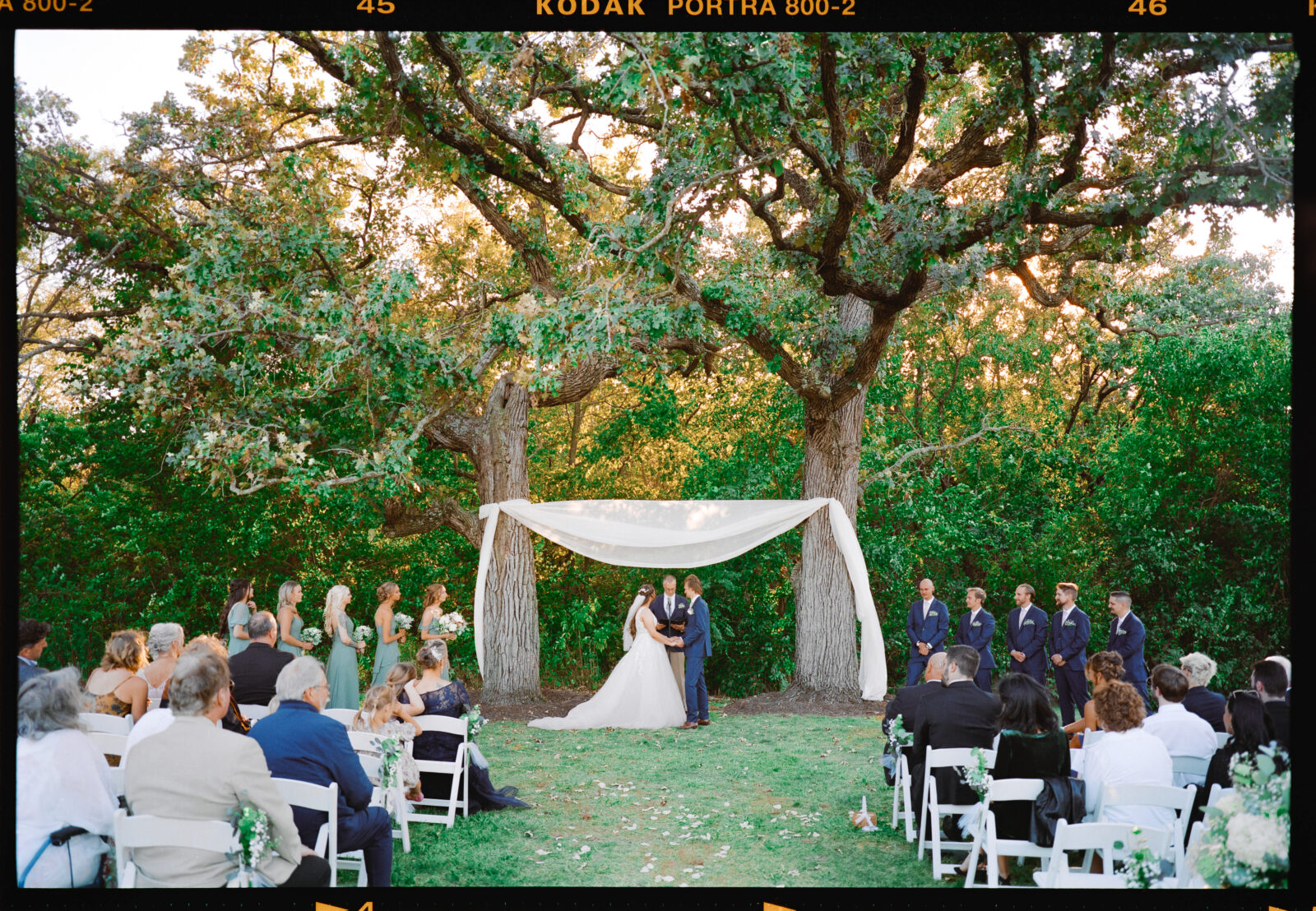
Here’s how I use my go-to stocks: Ilford Delta 3200 is my low-light weapon for receptions when I want that bold, high-grain, cinematic energy without needing perfect light. It’s designed for challenging indoor lighting and fast movement. Kodak Portra 800 is my “light + airy but still real” color film; it’s high-speed, daylight-balanced, known for pleasing skin tones and low overall contrast, and it holds highlight and shadow detail beautifully, so it fits my editing style like a glove. Kodak Ektar 100 is the crisp, vivid, ultra-fine-grain option for outdoor portraits and details when the light is good, and I want color to pop in a clean, luxurious way. And Ilford XP2 Super 400 is my flexible black-and-white choice because it’s a chromogenic B&W film that can be processed in standard C-41 color chemistry, has wide exposure latitude, and gives a clean, classic look that still feels modern.
Real-world film cost examples (so you can see why it’s an add-on):
- Ilford Delta 3200 (10 photos per roll): $18.99/roll
- Kodak Portra 800 (10 photos per roll, 5-pack): $87.95
- Kodak Ektar 100 (10 photos per roll): $14.99/roll
- Ilford XP2 Super 400 (10 photos per roll): $16.49/roll
- Developing: 120 Film Processing with Large Scans: $20/roll
To speak the truth, I typically shoot 5 rolls of Portra 800, 1 roll of Delta 3200, 2 Rolls of XP2 Super, and 1 roll of Ektar 100. That puts me at $154 + $200 for processing & scanning. The total is: $354 for one wedding, 10 rolls of film, 100 photos, out of pocket cost. That doesn’t include shipping the film or editing time.
My “main” Medium Format Film camera. Pentax 6×7 MLU (1976-1989).
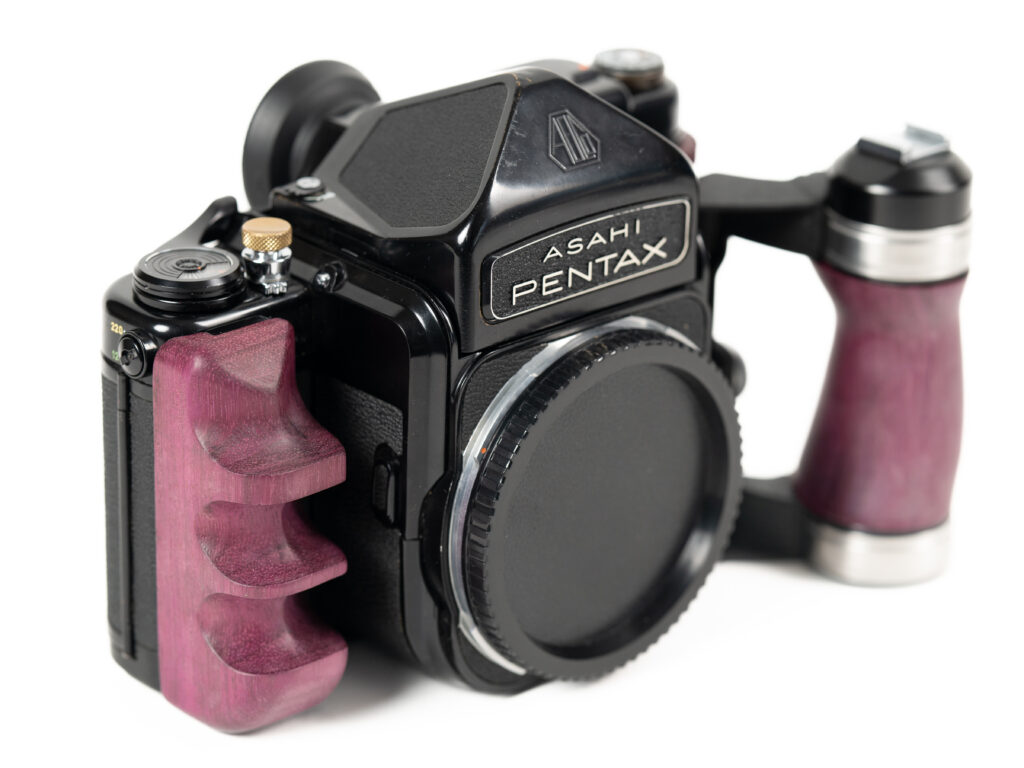
The Pentax 6×7 is iconic in the wedding world because it shoots 120 film on a big negative. 120 film can be shot in a range of frame sizes, depending on the camera, such as 6×4.5, 6×6, 6×7, and 6×9 (and a few others), and each size changes the image’s feel. 6×7 is the sweet spot for portraits because it provides a larger frame with a naturally flattering perspective and beautiful background separation, while still feeling balanced and “classic” rather than overly wide or too cropped. I own the Pentax 6×7 because it’s one of the most reliable ways to create those timeless portrait frames on a wedding day, the ones that feel like they should be printed big, framed, and passed down. Plus, it’s made of pure metal and wood, and even though it was produced in the 1970’s, it still works perfectly.
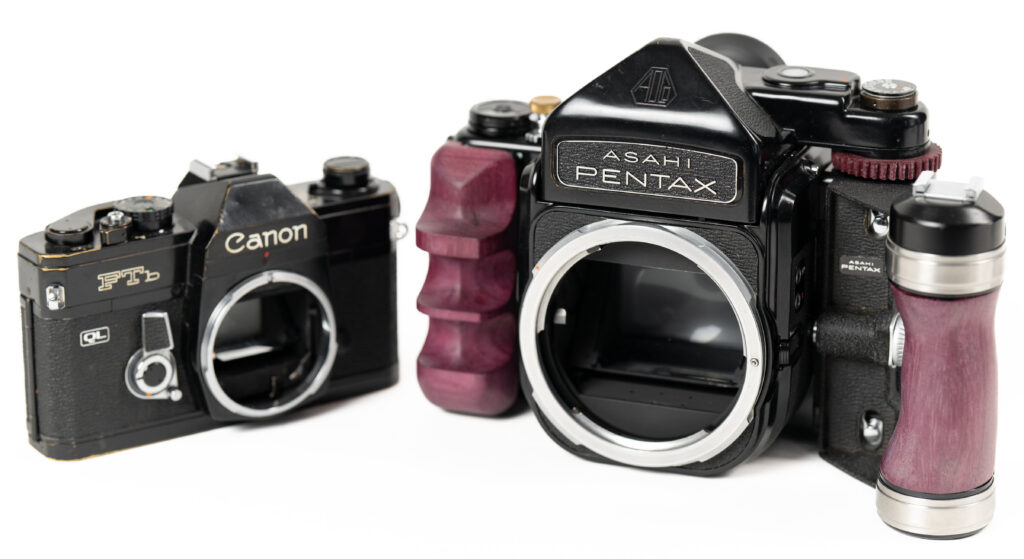
Size comparison between a 35mm camera (left) and a medium format camera (right).
Some of my recent favorites!